Collect rainwater on a budget
See how the authors collect and store irrigation water in inexpensive tanks. The book also discusses filtration.
By Ron & Johanna Melchiore
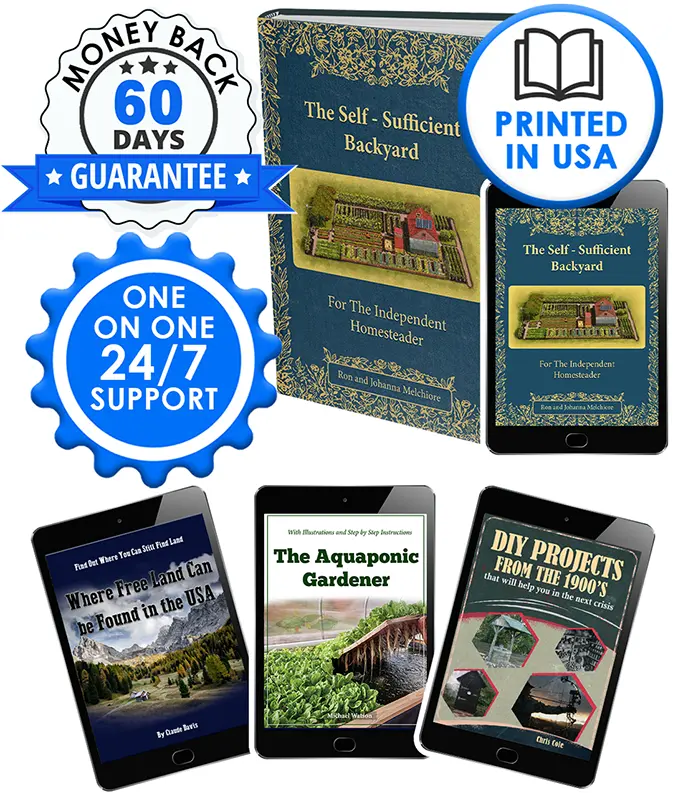
Grow more of your food, collect rainwater, and make better use of the space you already have. This illustrated book walks you through practical projects drawn from decades of off-grid living.
$37 USD
Printed book + e-book + 3 digital bonuses
Get the book + bonusesInstant e-book delivery. Your download link comes in the order confirmation email.
60-day money-back guarantee

Ron grew up in Philadelphia. In the late 1970s, he and Johanna joined the back-to-the-land movement and chose to try homesteading for themselves. Over the next four decades they lived off the grid, generating their own electricity, growing much of their food and putting away what they harvested for winter.
Printed book, instant e-book delivery, and three digital guides included.
$37 USD
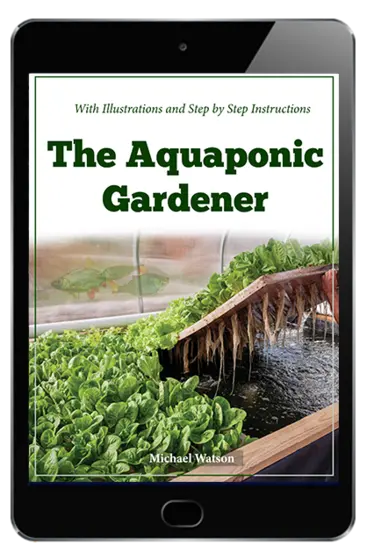
Grow vegetables and raise fish in one system that can fit a yard, basement or greenhouse.
$27 listed value · Included

Explore traditional homestead projects, from smokehouses and root cellars to small barns and solar water heaters.
$27 listed value · Included

Learn about U.S. homesteading programs and what to check for local eligibility and availability.
$27 listed value · Included
60-day money-back guarantee
At their remote home in Saskatchewan, a trip to the shops was no small errand. They learned how to keep vegetables through long winters, supply their own water, and use the space around the house as productively as they could. They grew herbs, collected rainwater for their garden and tried several ways to keep the water running when a pump failed.
When they reached their sixties, the Melchiores set out to build a smaller homestead that would take less work and money to maintain. They took the parts that worked best and put them together again. The Self-Sufficient Backyard is the illustrated guide to those choices, with projects readers can adapt to a larger property, a suburban yard, or a small indoor growing space.
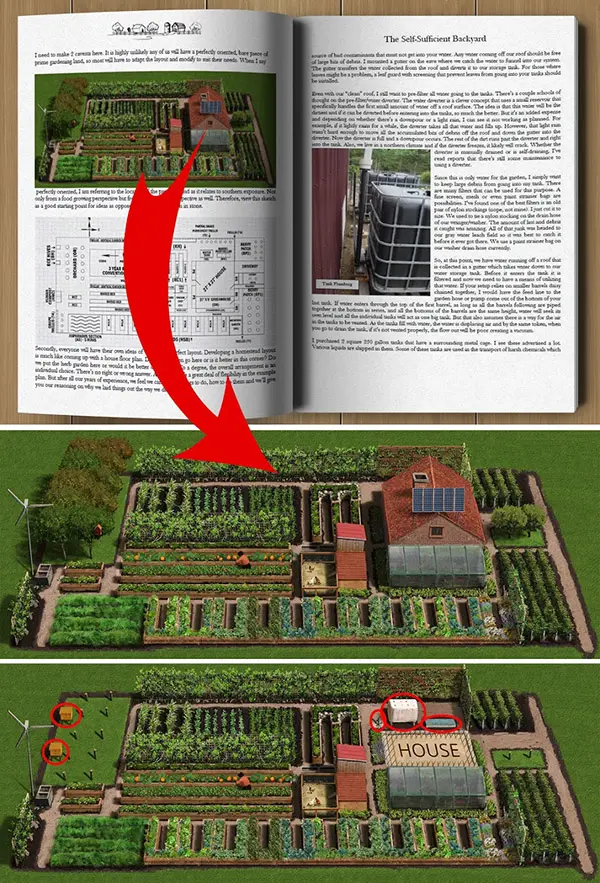
The Melchiores start with a quarter-acre layout for a family of four. Their growing plan allocates about 1,020 square feet per person, and the layout can be scaled down for smaller households or a tighter lot.
See how the authors collect and store irrigation water in inexpensive tanks. The book also discusses filtration.
The authors cover the seven herbs they chose for their own homestead, how they grow them and their traditional uses.
Follow the authors’ off-grid setup, from batteries and controllers to wiring and the inverter. They also discuss what to consider if you stay connected to the grid.
Build simple shelters to attract insect-eating birds during the day and bats at night. The book treats this as one way to manage garden pests.
Compare full-size and under-house cellars with simple barrel-sized options for smaller harvests.
Learn from the Melchiores’ experience with dug and drilled wells, lake water and hand pumps. Their kitchen hand pump doubled as a backup for the electric system.
See how their home setup provides pressurized hot water by making use of heat they already produce.
Learn how the authors adapt a conventional hive to collect honey in jars and bring pollinators to fruit trees and garden plants.
Compare south-facing placement, glazing, insulation, ventilation, cold frames and underground air tubes. In Saskatchewan, the authors used a cold frame to grow lettuce while snow was still on the ground.
Start in a small basement space with an overhead light. The authors describe harvesting an initial cut in about two weeks and discuss local restaurants as a possible market.
Alongside microgreens, the authors discuss six crops for readers interested in selling what they grow.
A dedicated chapter shows how to lay out garden projects so you can reach and tend them more comfortably.
The book brings together around 100 suggestions on everyday expenses, including food, electricity, water, heating, repairs, tools and property costs.
The authors show how to set up a compact composting tower to put food scraps back to work in the garden.
Explore hoop tunnels, sunken greenhouses, trellises, raised beds, straw-bale gardens, and ideas for growing in containers and windows.
Explore more than 50 ideas for setting up and looking after a small coop as a source of food for the household.
Choose and place fruit trees for a backyard orchard designed to produce over many seasons.
Learn how to collect and store seeds, including when fermenting seeds is useful. The book also describes curing produce before freezing it.
The authors describe the methods they relied on for eggs, vegetables, roots, fruit and meat when winter made it difficult to buy supplies. The book covers preservation methods that don’t require electricity.
The publisher lists these as free extras and gives each a standalone value of $27.
The Melchiores suggest starting with one project that matches your space, time or budget and building from there.
Summaries of the reader reviews published on the authors’ page.
Pick one thing you’d like to grow, build or preserve. Ron and Johanna lay out the choices they made across decades of homesteading so you can decide what fits your own place.
The authors advertise a 60-day money-back guarantee. Check the return terms for your order at Digistore24.
Printed book + digital edition
$37 USD
Continue to checkoutDelivery details at checkout.